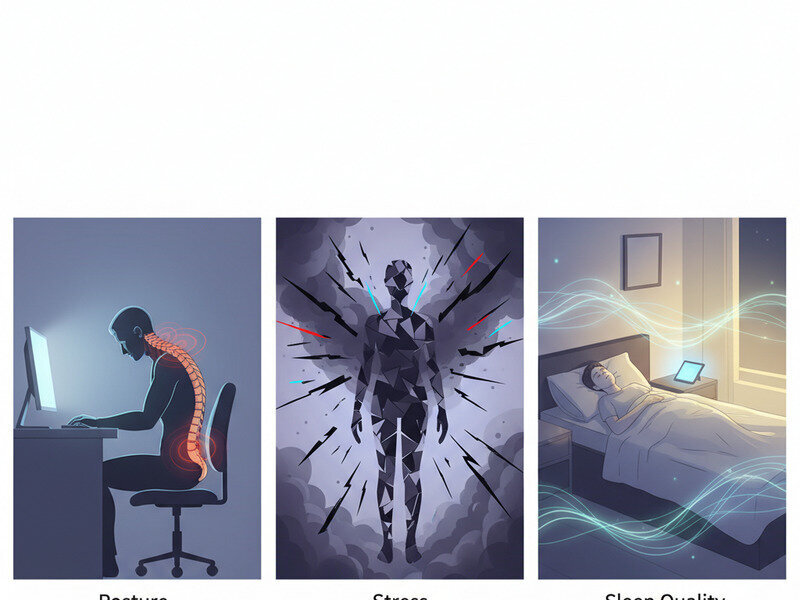
In our digital age, screens are ubiquitous. From smartphones to laptops and televisions, screens have become an integral part of daily life. While these devices offer convenience and connectivity, they also bring challenges, particularly concerning posture, stress levels, and sleep quality. Understanding how screen time affects these aspects of health can help individuals make informed decisions about their screen use.
Screen Time and Posture
Posture refers to the way we hold our bodies while standing, sitting, or lying down. Good posture is crucial for maintaining the alignment of bones and joints, reducing wear and tear on the body, and preventing muscle strain. However, prolonged screen time often leads to poor posture, commonly known as "tech neck" or "text neck." This condition arises when individuals hunch over their devices, leading to a forward head posture.
Research has shown that this forward head posture increases the stress on the cervical spine. For every inch the head moves forward, the weight experienced by the neck doubles. Over time, this can lead to chronic pain and discomfort. A study published in the journal Surgical Technology International highlighted ...
Premium preview
Premium members unlock the full article—complete step-by-step routines, deeper coaching notes, and exclusive frameworks.