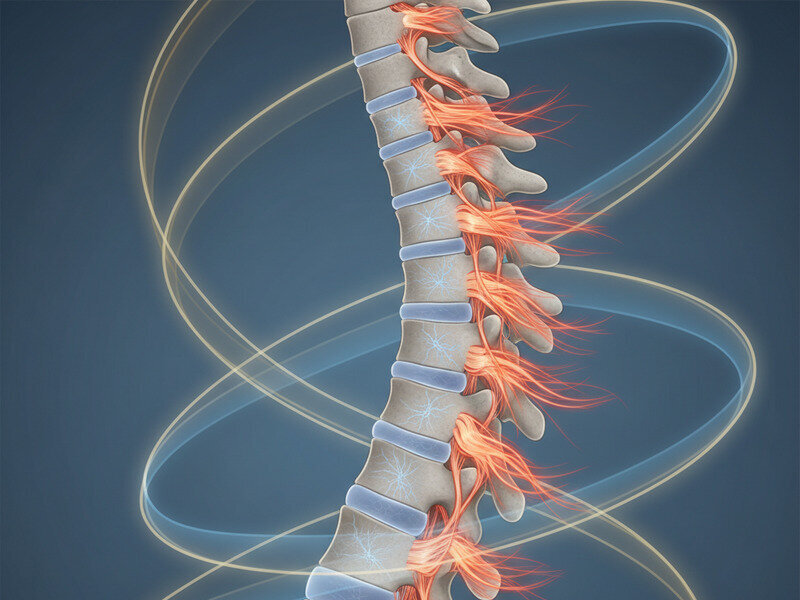
The human spine is a marvel of engineering, providing both support and flexibility. However, it is also a frequent site of discomfort and disease. One particular condition that affects the spine is enthesitis, an inflammation of the entheses, where tendons or ligaments attach to bone. Understanding why the spine is a target for enthesitis and how bone stress plays a role requires a closer look at the anatomy and biomechanics of the spine, as well as the pathophysiology of enthesitis itself.
The Anatomy and Function of the Spine
The spine is composed of 33 vertebrae, intervertebral discs, and a complex network of muscles and ligaments. These structures work together to support the body's weight, allow for movement, and protect the spinal cord. The vertebrae are connected by facet joints, which provide stability and flexibility. Ligaments and tendons attach to these bones at specific sites known as entheses. These attachment points are crucial for transferring forces from muscles to bones, enabling movement.
Given its role in bearing loads and facilitating motion, the spine is subject to significant mechanical stress. This stress can be exacerbated by factors such as poor pos...
Premium preview
Premium members unlock the full article—complete step-by-step routines, deeper coaching notes, and exclusive frameworks.