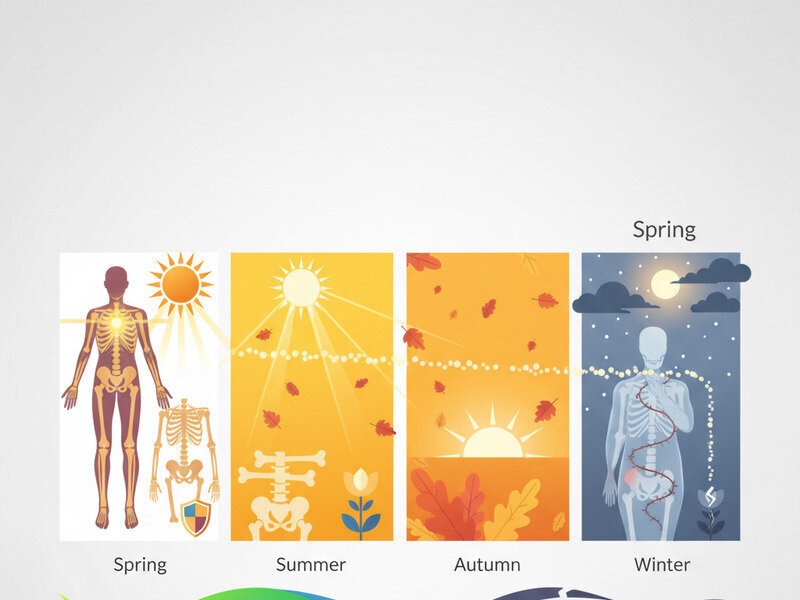
Vitamin D is a crucial nutrient that plays a significant role in maintaining bone health, supporting immune function, and modulating inflammation. Unlike most vitamins, vitamin D can be synthesized by the body when the skin is exposed to sunlight, specifically ultraviolet B (UVB) rays. However, this synthesis is influenced by several factors, including geographical location, skin pigmentation, and, importantly, seasonal changes. Understanding how these seasonal variations impact vitamin D levels and related symptoms is essential for maintaining optimal health throughout the year.
During the summer months, when the sun is high in the sky and days are longer, the potential for vitamin D synthesis is at its peak. The increased exposure to sunlight allows for more UVB rays to penetrate the skin, stimulating the production of vitamin D. In contrast, during the fall and winter months, especially in higher latitudes, the sun's angle is lower, and daylight hours are shorter. This seasonal shift significantly reduces the amount of UVB radiation reaching the earth's surface, thereby decreasing the body's ability to produce vitamin D naturally.
The Role of Latitude and Sun Exposure
La...
Premium preview
Premium members unlock the full article—complete step-by-step routines, deeper coaching notes, and exclusive frameworks.