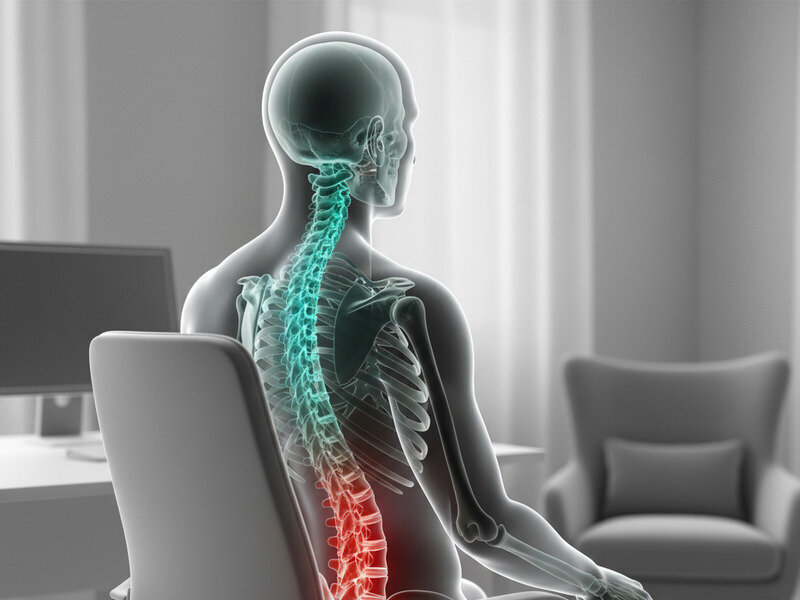
In today's world, prolonged sitting has become an almost unavoidable part of daily life. Whether at work, during commutes, or while relaxing at home, many people spend a significant portion of their day seated. While this may seem benign, the effects of extended sitting on the spine can be profound and far-reaching. Understanding these impacts requires a closer look at how the spine functions, what happens when it is subjected to prolonged periods of inactivity, and the potential long-term consequences.
The human spine is a marvel of engineering, designed to support the body's weight, protect the spinal cord, and allow for a wide range of movements. It is composed of 33 vertebrae, intervertebral discs that act as shock absorbers, and a complex network of muscles and ligaments that provide stability and flexibility. This intricate structure is optimized for movement and dynamic activity, not for remaining in a static position for hours on end.
How Prolonged Sitting Affects the Spine
When you sit for extended periods, several physiological changes occur in your spine. First, sitting increases the load on the lumbar discs in the lower back. A study published in the journal "Sp...
Premium preview
Premium members unlock the full article—complete step-by-step routines, deeper coaching notes, and exclusive frameworks.