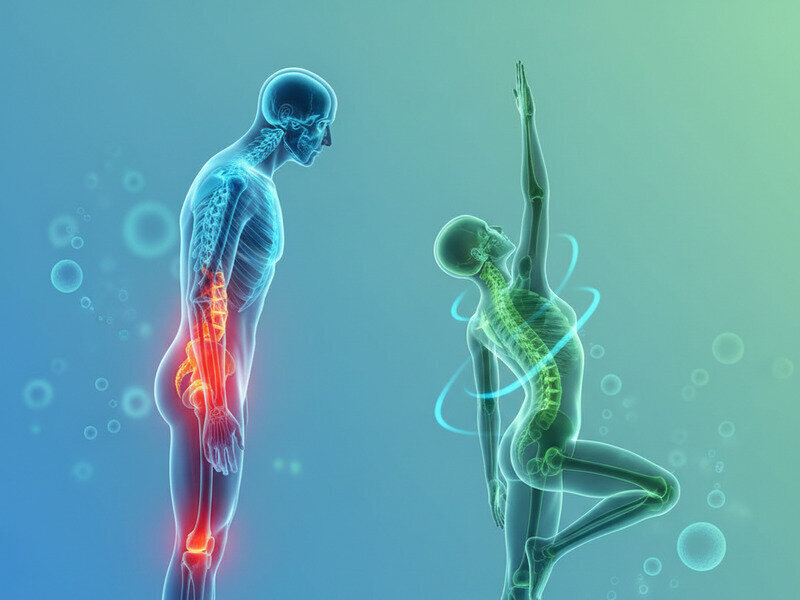
Ankylosing spondylitis (AS) is a form of inflammatory arthritis that primarily affects the spine, although other joints can also be involved. The hallmark feature of AS is the inflammation of the sacroiliac joints, located at the base of the spine. Over time, this inflammation can lead to the fusion of vertebrae, resulting in a loss of flexibility and mobility, and potentially causing a forward-stooped posture. Understanding how AS affects posture and exploring corrective exercises can empower individuals to manage their condition more effectively at home.
AS typically begins in early adulthood, and its progression can vary significantly among individuals. The inflammation associated with AS can lead to new bone formation on the spine, causing sections of the spine to fuse in a fixed, immobile position. This process, known as ankylosis, can severely impact posture, leading to a characteristic forward curvature of the spine known as kyphosis. This change in posture not only affects physical appearance but can also lead to difficulties in breathing and performing daily activities.
The Role of Exercise in Managing Ankylosing Spondylitis
Exercise plays a crucial role in managing ...
Premium preview
Premium members unlock the full article—complete step-by-step routines, deeper coaching notes, and exclusive frameworks.