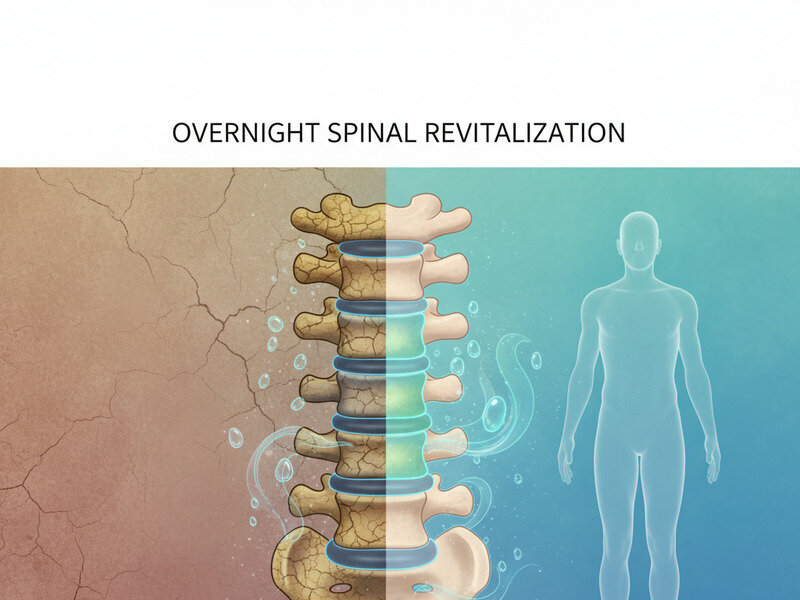
Ankylosing spondylitis (AS) is a chronic inflammatory disease primarily affecting the spine and sacroiliac joints, leading to pain and stiffness. One of the less discussed aspects of this condition is how overnight spine hydration can influence stiffness, particularly in the morning. Understanding this relationship requires a closer look at both the physiological processes involved in spinal hydration and the pathophysiology of ankylosing spondylitis.
The Role of Spinal Hydration
The spine is a complex structure composed of vertebrae and intervertebral discs. These discs act as cushions between the vertebrae and are composed of a gel-like center called the nucleus pulposus, surrounded by a tougher outer layer known as the annulus fibrosus. The nucleus pulposus is highly hydrophilic, meaning it attracts and retains water. This property is crucial for maintaining disc height and flexibility, allowing the spine to absorb shock and facilitate movement.
During the day, as we stand and sit upright, gravitational forces compress the spine, causing some fluid to be expelled from the intervertebral discs. At night, when we lie down, these forces are relieved, allowing the discs to r...
Premium preview
Premium members unlock the full article—complete step-by-step routines, deeper coaching notes, and exclusive frameworks.